
Newsletter # 073
Your Reputation Is Working Against You
May 12, 2026
Written By: Misha Rubin
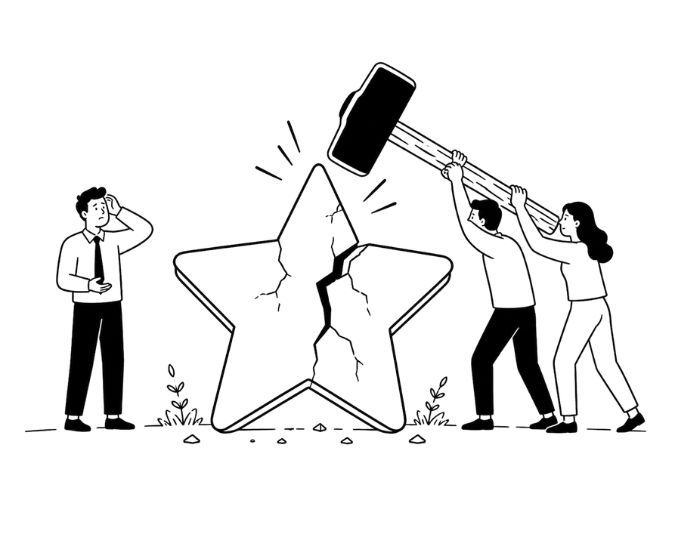
You didn’t write it.
You may not know what it says.
But it exists — in the minds of the people around you.
And it’s shaping every opportunity that comes your way.
Here’s the part most people miss.
Your reputation is a record of your past.It’s built from what you’ve already done: your wins, your losses, the moments people remember.
The future you want is not in that record yet.
Which means the reputation that got you here cannot, on its own, take you where you want to go next.
Your reputation is yesterday’s evidence. The future requires new evidence.
THE TWO PROBLEMS
Every reputation problem comes in one of two forms.1. You’re not known.
People don’t have enough information to form a view, so they fill in the blanks from fragments: a title, a function, one meeting, a secondhand account.
You’re being defined by your absence.
2. You’re known (for the wrong things).
People have categorized you.
The reputation is real, earned, often good.
And it’s a ceiling.
Because the next level rarely needs more of what you’ve already proven. It needs evidence of something new.
Most people only think about the first problem. The second one is the one that quietly stalls careers.
WHY REPUTATIONS GET STUCK
Princeton researchers found that people form a stable impression of a stranger’s face in 100 milliseconds.Longer exposure doesn’t change the impression. It only makes people more confident in the one they already have.
The same thing happens at work, just slower.
Once people have categorized you, the operator, the finance person, the safe pair of hands, their brains stop looking for new information.
New evidence gets filtered through the existing category instead of challenging it.
Doing more of what you already do well doesn’t move your reputation forward.
It deepens it.
HOW TO BREAK THE CATEGORY
You change a reputation by introducing evidence that doesn’t fit the existing story.Three moves do that. Each one builds on the last.
1. Have a vision worth following.
The operator is known for answers.
The leader is known for what they see coming.
People follow vision, not output.
Form a clear view of where your industry, your function, or your business is going — and make that view visible.
A vision people can repeat is a reputation in motion.
2. Be associated with what’s next, not what’s now.
The fastest reputation shifts happen when you get known for an emerging area before it’s obvious.
The category hasn’t formed yet, so you help define it.
Pick the shift you believe in.
Move toward it early.
Get connected to it publicly — through the work you take on, the questions you ask, the rooms you choose.
3. Use what you’re known for to point somewhere new.
You don’t have to abandon your strength.
You have to change what it’s for.
The finance person who reads the business, not just the numbers.
The operator who sees what the strategy is missing.
Your existing reputation becomes the launch point, not the cage.
Reputations don’t change in a conversation. They change when a pattern becomes undeniable.
YOUR MISSION, SHOULD YOU CHOOSE TO ACCEPT IT
Run a short reputation audit.
1. Write the one-sentence description that circulates about you today. Be honest.
2. Write the one you need for where you’re going next. Be specific.
3. Name the three to five people whose view of you actually shapes your future. Not everyone. The few who matter.
4. Pick one of those people. Choose one action this month that gives them something new to see — a point of view, an idea, a conversation about where you’re headed.
Then do it again next month.
And the month after that.
Reputations are built slowly and changed slowly.
The work is not in the moment. It’s in the pattern.
“What you do speaks so loudly that I cannot hear what you say.” — Ralph Waldo Emerson
To what's next,

Misha Rubin
What's-Next Coach
What's-Next Coach
Share this to help your nework


When you're ready for more:
When you're ready for more:
The Career Strategy Blueprint
The Career Strategy Blueprint
The best hour you will ever invest in your career. Have a vision. Make better decisions. Right now.
arrow_drop_down_circle
Divider Text
The New Era Leaders Collective
The New Era Leaders Collective
Direct access to my latest thinking on career, future, and life.
arrow_drop_down_circle
Divider Text
A 1:1 Career Clarity Session
A 1:1 Career Clarity Session
Let's deep dive on the decision you can't afford to get wrong.